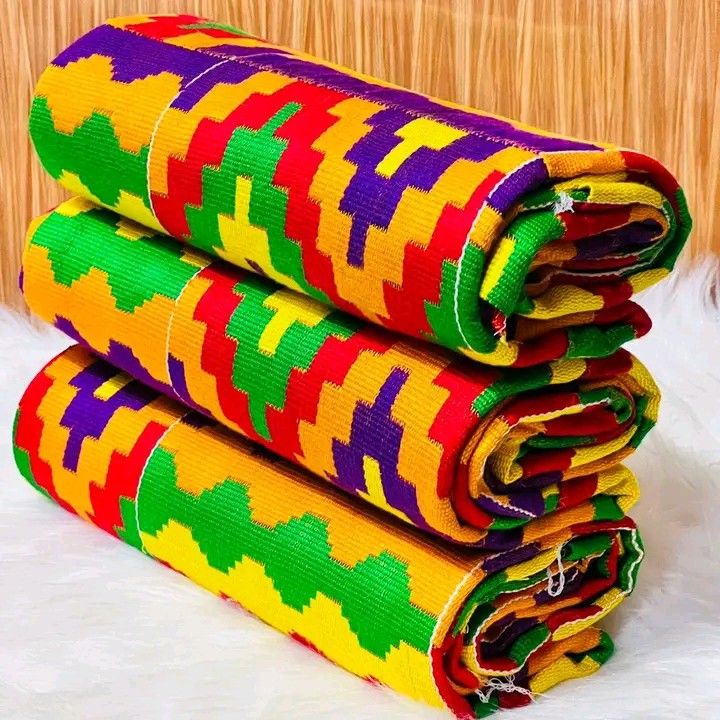
In the 17th century, the village of Bonwire in Ghana's Ashanti Region became the birthplace of Kente weaving. The story begins with
two villagers, OtaaKraban and Kurugu, who were inspired by the intricate patterns of a spider’s web. Observing the spider’s weaving
technique, they experimented with raffia fibers to create beautiful cloth that mimicked the spider's artistry. Their work captured the
attention of Asantehene Osei Tutu I, who deemed it fit for royalty, thus establishing Kente as the royal cloth of the Ashanti kingdom.
Kente cloth became a symbol of power, prestige, and cultural sophistication. Exclusively worn by royalty and during significant
ceremonies such as weddings, funerals, and festivals, Kente patterns (known as "Nwentoma") and colors carried profound
meanings. Each design represented values like unity, strength, and wisdom, while colors signified attributes such as wealth (gold),
sacrifice (red), and renewal (green).
The ongoing challenge for Bonwire is to balance cultural preservation with self-expression in a globalized world. As Kente evolves, it
is vital to maintain its authenticity while allowing new generations to adapt the craft. Bonwire stands at the forefront of this
endeavor, showcasing that culture can evolve without losing its core values of heritage, identity, and self-expression.
Today, Bonwire is recognized as a cultural hub for Kente weaving, attracting tourists and researchers interested in its rich heritage.
Visitors come to see live weaving demonstrations, purchase authentic handwoven Kente, and participate in the annual Bonwire Kente Festival.
The village remains committed to preserving the craft through traditional techniques while adapting to modern
influences.
Kente has transcended its original purpose, becoming a global symbol of African heritage and identity. It adorns not just royalty but
also everyday individuals and is celebrated in fashion shows and international events.
The weavers of Bonwire continue to honor the tradition, ensuring that each piece of Kente tells a story and reflects a legacy.